Intelligent Yoga for the Modern Body
Practice with Awareness. Move with Understanding.
Welcome to
School of YogaSutra
Welcome to YogaSutra — a place where yoga is practiced with both tradition and understanding. In the midst of Bangkok’s fast-paced city life, our studios offer a space to slow down, explore movement, and reconnect with the body through thoughtful practice.
BOOK NOWWhether you are beginning your yoga journey or deepening an established practice, YogaSutra provides an environment where movement, breath, and awareness come together to support long-term well-being.
The School of YogaSutra
Practice with Awareness. Move with Understanding.
The School of YogaSutra is an educational platform dedicated to the study of yoga practice, teaching, and movement. Our programs combine traditional yoga wisdom with modern understanding of anatomy, biomechanics, and the nervous system. Through a modular learning system, students can deepen their knowledge gradually while building the skills required to teach responsibly and sustainably.
Rather than offering a single intensive teacher training, the school provides a flexible pathway where students can participate in individual modules, specialized trainings, and mentorship programs that accumulate toward professional certification. Whether you are beginning your journey as a yoga teacher or continuing your professional development, the School of YogaSutra offers an environment for meaningful learning and long-term growth.
Explore the Learning PathwayRather than offering a single intensive teacher training, the school provides a flexible pathway where students can participate in individual modules, specialized trainings, and mentorship programs that accumulate toward professional certification. Whether you are beginning your journey as a yoga teacher or continuing your professional development, the School of YogaSutra offers an environment for meaningful learning and long-term growth.
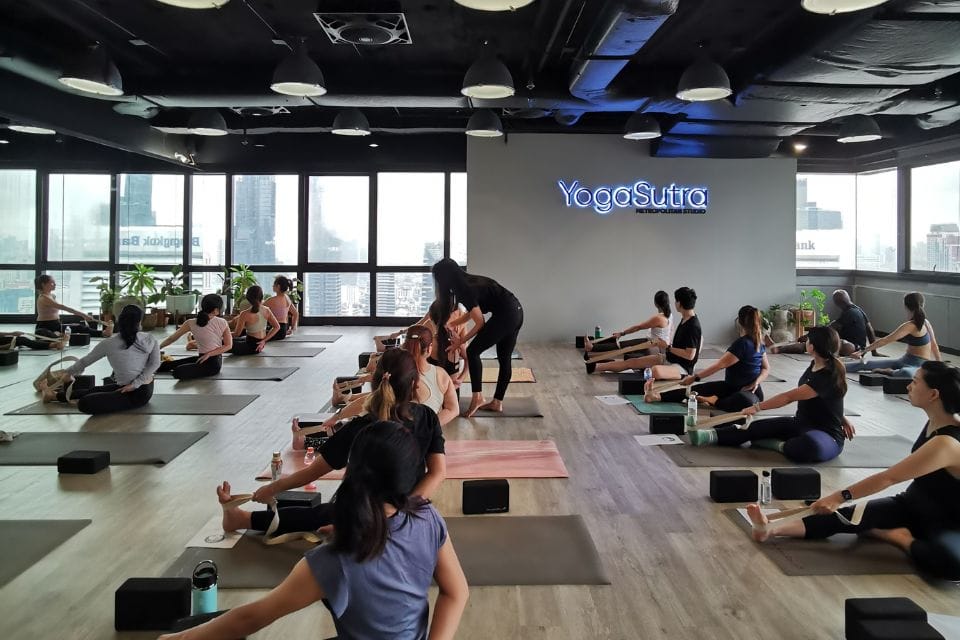
A Different Approach to Yoga Education
Many teacher trainings are completed in a short intensive period. While this format can be valuable, meaningful learning often develops gradually through practice, reflection, and real teaching experience.
The School of YogaSutra follows a modular education model.
Students may join individual modules, workshops, and teacher trainings, each contributing hours toward certification. This approach allows learning to unfold at a sustainable pace while supporting deeper integration of knowledge and practice.
Our Educational Philosophy
The curriculum of the School of YogaSutra is guided by three principles.
Embodiment
Many teacher trainings are completed in a short intensive period. While this format can be valuable, meaningful learning often develops gradually through practice, reflection, and real teaching experience.
Application
Knowledge is applied to real bodies. Anatomy, biomechanics, and teaching skills are integrated into practice.
Integration
Teaching maturity develops through observation, reflection, and ethical responsibility.