
Rest is the Skill
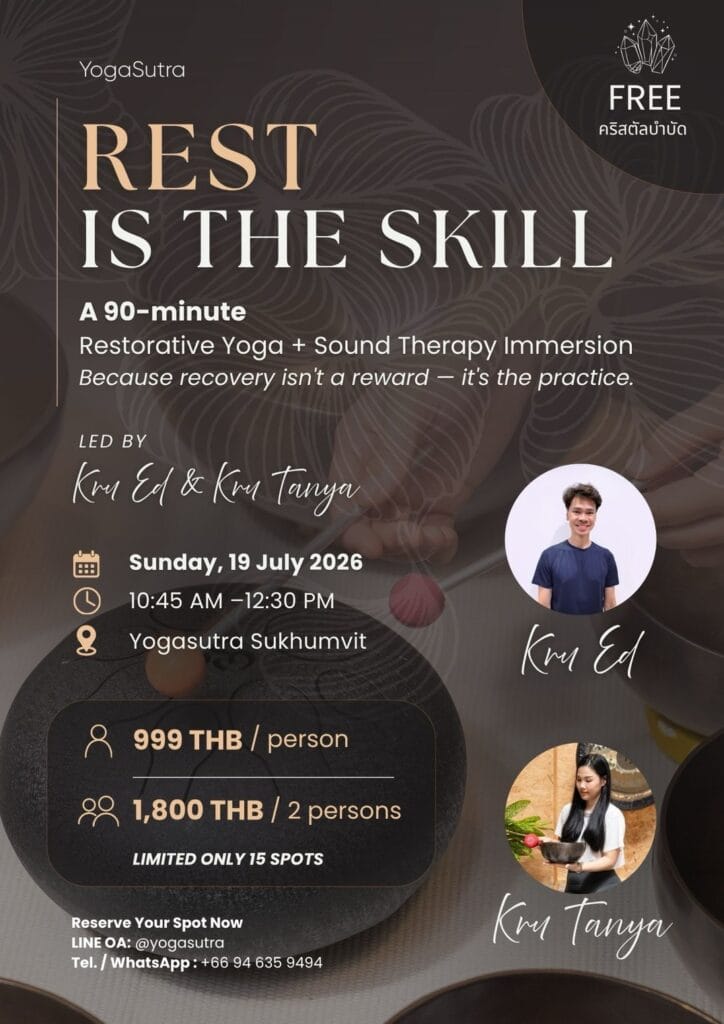
Date:
July 19, 2026
Location:
Sukhumvit
Restorative Yoga and Sound Healing: The Art of Slowing Down
The body keeps score — not just of trauma, but of everything. Every deadline pushed through, every workout completed on too little sleep, every evening that ended with the mind still running. We live in a culture that celebrates capacity, and quietly penalises rest.
But here’s what physiology will tell you plainly: recovery isn’t optional. It’s where adaptation actually happens.
THE PROBLEM WITH ALWAYS GOING
Stress, when acute and followed by adequate recovery, makes us stronger — physically, mentally, emotionally. This is the basis of all training. But when stress becomes chronic — when the recovery never arrives — the system begins to break down.
We see this in the person who trains every day and wonders why their body feels worse, not better. In the professional who works long hours and finds that their thinking becomes slower, not sharper. In anyone who wakes up already tired.
The nervous system is not a machine. It doesn’t perform better the harder you push it without pause. It performs better when it’s been given the signal that it’s safe to rest — and actually been allowed to do so.
REST AS A PRACTICE
Most of us are not very good at resting. We lie on the sofa with our phones. We call it rest, but the nervous system remains on alert. What we call downtime is often still input — still stimulation, still processing.
True rest is different. It’s physiological. It’s the activation of the parasympathetic nervous system — sometimes called “rest and digest” — which allows the body to repair tissue, regulate hormones, and restore cognitive function. It’s measurable. And it’s a state that most people rarely reach intentionally.
This is where restorative yoga and sound therapy come in — not as alternatives to rest, but as structured pathways into it.
RESTORATIVE YOGA — SUPPORT AS A TOOL
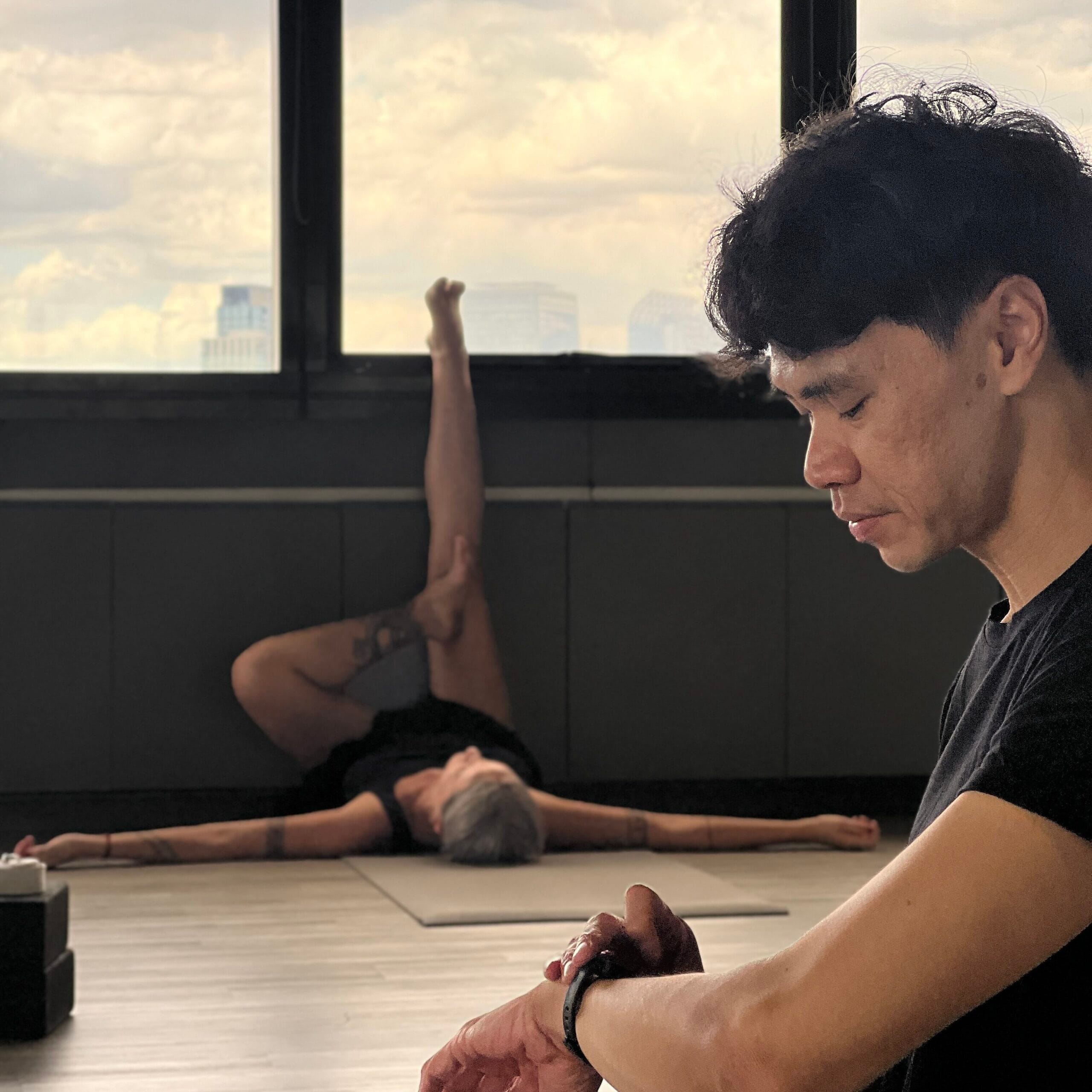
Unlike most yoga practices, restorative yoga does not ask the body to work. Poses are held passively, often for five to fifteen minutes, with full prop support — bolsters, blankets, pillows — designed to allow every muscle group to release completely.
There is no effort. That’s the point.
When the body is held without effort, and the environment signals safety, the nervous system begins to downregulate. Breathing slows. Heart rate decreases. The constant background hum of alertness begins to quiet. This is not relaxation in the casual sense — it’s a physiological state that has measurable benefits: reduced cortisol, improved sleep quality, reduced inflammation, and enhanced recovery from physical training.
For those in intense training, restorative practice is not a rest day — it’s an active part of the training cycle. For those under high cognitive or emotional load, it’s a reset that coffee and scrolling will never provide.
SOUND THERAPY — THE NERVOUS SYSTEM IN SOUND
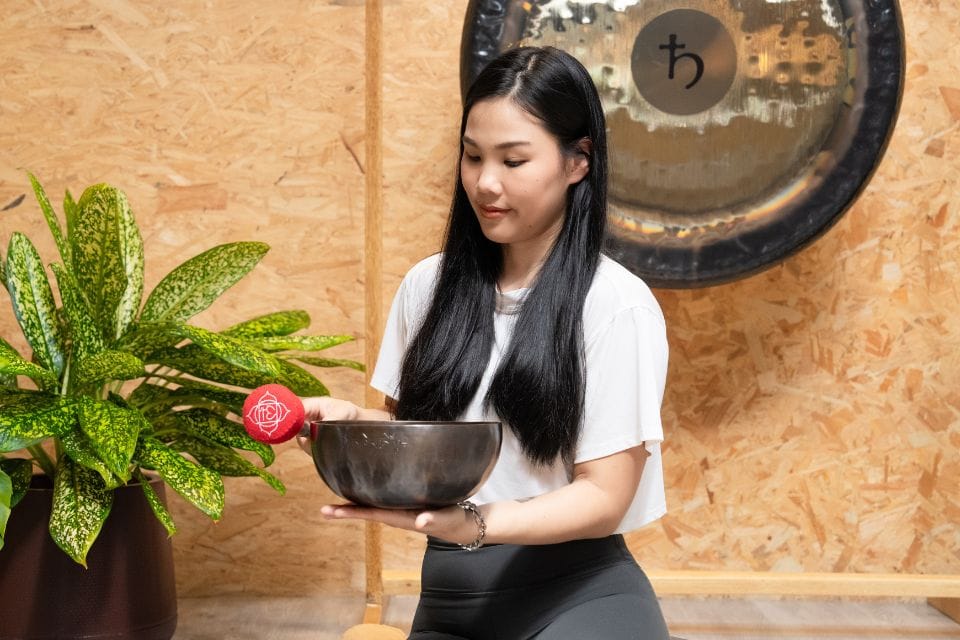
Sound healing — particularly through gongs and Tibetan singing bowls — works on a different layer. The sustained tones, overtones, and vibrations produced by these instruments interact with the body’s own rhythms.
Sound does not demand anything of you. It simply arrives — and in its arrival, asks only that you receive it.
Research in psychoacoustics has explored how low-frequency sound can facilitate shifts in brainwave activity, moving from the beta state (alert, problem-solving) toward alpha and theta — states associated with deep relaxation, creativity, and the threshold of sleep. In practice, many participants describe the experience as a form of conscious surrender: still aware, but deeply, unusually still.
When combined with the physical stillness of restorative yoga, sound therapy deepens and extends the nervous system’s parasympathetic response. The body is held. The mind is carried by sound. Together, the conditions for genuine rest are finally met.
WHY THIS MATTERS NOW
We are not short on productivity advice. We are not short on high-intensity options, optimisation hacks, or ways to do more. What we are short on — structurally, culturally — is permission to slow down, and skill in actually doing it.
Rest is the Skill is offered in that spirit. Not as an escape from a busy life, but as a complement to it. A 90-minute investment in the part of the recovery cycle that most people skip entirely.
The body heals in rest. The mind integrates in rest. Performance, long-term, depends on rest.
If that sounds like something you need — it probably is.
EVENT DETAILS
Rest is the Skill — Restorative Yoga + Sound Therapy Immersion
Sunday, 19 July 2026 | 10:45 AM – 12:30 PM
YogaSutra Studio — Sukhumvit, 1F The Capital Sukhumvit 30/1
Led by Ed (Kanisorn Namchaiswadwong) & Tanya Thapanand
999 THB / person | 1,800 THB / 2 persons
Limited to 15 participants — advance booking required
[BOOK YOUR SPOT →]
LINE OA: @yogasutra
Tel. / WhatsApp: +66 (0) 94 635 9494
Email: yogasutrathai@gmail.com
Whether you are new to yoga or continuing an established practice,

we offers a welcoming space to explore movement, breath, and awareness.